

Medical practice SEO in Dallas comes down to four jobs. You need to win the Google Maps results near your office, have one clear page for each procedure or visit type patients search for, collect a steady flow of honest reviews, and make sure ChatGPT and Google’s AI answers describe your practice correctly. Do all of that without sending patient data to ad and analytics tools. Our healthcare plans start at $1,250 a month, and the first review is free.
Most new patients compare two or three nearby practices on their phone before they call. The practice that wins usually has a complete Google Business Profile, a clear page for the exact visit they need, recent reviews and an easy way to book. Fix tracking on your appointment pages before you spend money on traffic.
Where Dallas Patients Look Before They Book
A patient in Lake Highlands with a skin concern, a parent in Frisco looking for a pediatric dentist, or someone near the Medical District who needs a same-week physical therapy visit all start the same way. They search on a phone, look at the map, read a few reviews, open one or two websites and call or book. More of them now also ask ChatGPT or read Google’s AI Overview before they click anything.
That gives a practice four places to be found. Each has different rules, and each one is something your team can actually influence.
| Where they look | What decides who shows up | What your practice controls |
|---|---|---|
| Google Maps and the local 3-pack | Relevance to the search, distance from the searcher and how well known the practice is | A complete, verified Business Profile, the right categories, accurate hours, photos and reviews |
| Regular Google results | Whether a page clearly answers the search and shows who wrote and reviewed it | One page per procedure or visit type, written for patients and reviewed by a clinician |
| ChatGPT, Gemini and Google AI answers | The facts the engine can find and trust about your practice across the web | Consistent name, address, phone, specialties and doctors on your site and listings |
| Reviews on Google and health sites | How many recent, real reviews you have and how you reply | Asking every patient the same way and replying without confirming anyone is a patient |
How to read this table: the right column is your to-do list. Hospital systems in Dallas outspend independent practices on ads, but the map results are local and the procedure pages are specific, which is where a well-run independent practice can win.
Google is open about the map part. Its Business Profile help says local results are “mainly based on relevance, distance, and popularity,” and that there is no way to pay for a better local ranking (Google Business Profile Help). Distance you cannot change. Relevance and popularity are the work.
Set Up Your Google Business Profiles the Way Google Wants
Medical practices get this wrong more than almost any other business type, because Google treats doctors as “individual practitioners” with their own rules. Its guidelines for representing your business name doctors and dentists as individual practitioners and allow a title such as Dr. or MD in the practitioner’s profile name. What setup you need depends on how many doctors see patients at the location.
Once the structure is right, the details decide relevance:
- Primary category. Pick the one that matches the visit you most want (“Dermatologist”, “Pediatric dentist”, “Physical therapy clinic”), then add secondary categories only for services you really offer. Our guide to choosing Google Business Profile categories walks through it.
- Name. Use the name on your sign and website. Google says unnecessary words in the business name are not allowed and can lead to suspension, so “Best Botox Dallas” added to a name is a risk, not a tactic.
- Hours and phone. Keep holiday hours current. A patient who calls a closed office on a Saturday rarely tries twice.
- Photos. Real photos of the entrance, parking, waiting room and team help a nervous patient picture the visit. Leave patients out of them unless you have written permission.
Build One Page for Each Procedure or Visit Type
Patients do not search for “healthcare services.” They search for “dental implants Plano,” “knee pain physical therapy near me” or “Botox cost Dallas.” If your website has one long services page, Google has to guess which part answers the question, and it usually picks a competitor whose page is about exactly that.
A good procedure page answers what a patient wants to know before they call:
- What the treatment is, in plain words, and who it is for
- What happens at the first visit and how long it takes
- Recovery or follow-up visits, as a range, not a promise
- Cost or insurance: either your real prices or which plans you accept and how self-pay works
- Which of your doctors performs it, with their credentials
- A short FAQ and a clear way to book
Health content is held to a higher standard. Google’s guide to helpful, reliable, people-first content asks site owners to make clear who created the content and what their expertise is. For a practice that means a named author or clinical reviewer with credentials on every medical page. A page “by Admin” does not meet that bar.
One procedure, one page. Two pages that both target “teeth whitening” compete with each other, and city pages that only swap the city name look like doorway pages to Google. If you serve several suburbs, read how to build local service pages without doorway pages first. Practices with several offices can follow our guide on patient acquisition for multi-location medical practices.
Keep Your Tracking HIPAA-Safe Before You Chase Traffic
Most marketing advice says: install the Meta pixel, Google Ads tags and analytics everywhere, then optimize. For a medical practice that advice can create a privacy problem. The U.S. Department of Health and Human Services published a bulletin on online tracking technologies that explains where the HIPAA Rules apply.
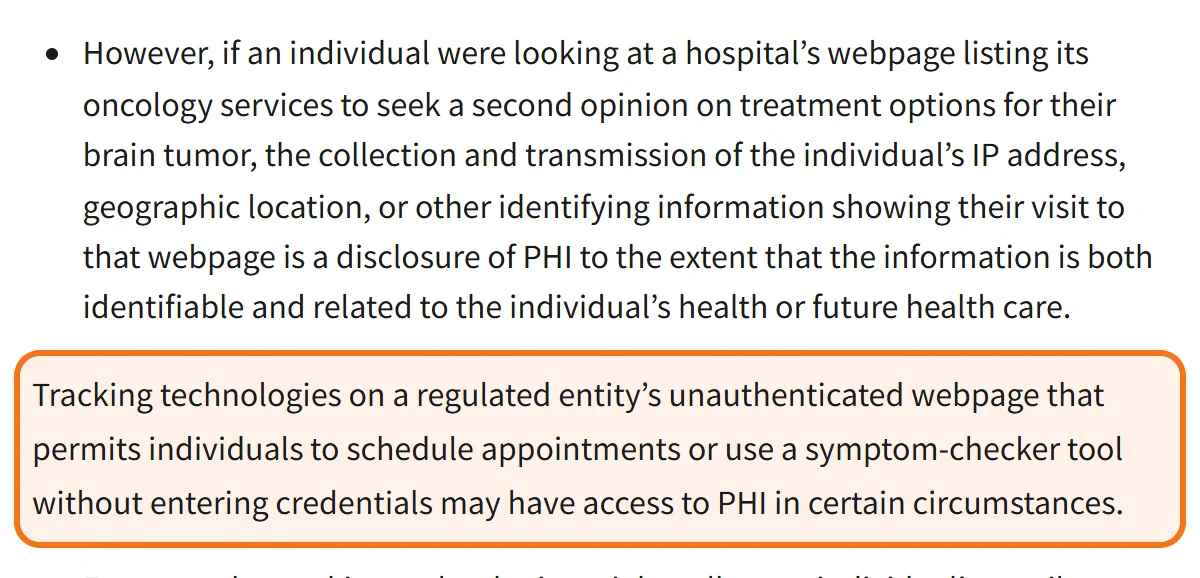
Three points from that bulletin matter most for marketing:
- Patient portals. HHS says tracking on pages that need a login “generally” has access to protected health information (PHI). Marketing pixels do not belong there.
- Appointment and symptom pages. Tracking on a public page where someone books a visit or enters symptoms may have access to PHI, as the screenshot shows. HHS gives the example of a clinic’s booking page sending appointment details and the visitor’s IP address to a tracking vendor. In that case the vendor is a business associate and a business associate agreement is required.
- Cookie banners are not enough. HHS says a banner asking visitors to accept cookies is not a valid HIPAA authorization.
There is a Texas twist. In June 2024 the U.S. District Court for the Northern District of Texas vacated one part of the bulletin: the part saying HIPAA is triggered when a tool connects a visitor’s IP address with a visit to a public page about a health condition or provider. HHS notes this at the top of the bulletin. The rules for portals and booking forms above were not part of that order.
What we do in practice is simple. We keep ad and social pixels off the portal, the booking flow and any form that asks about symptoms or treatment, and we measure bookings in a way that does not send health details to ad platforms. Do not assume a vendor will sign a business associate agreement; get it in writing or keep that vendor off those pages. If you use Microsoft Clarity or similar tools, our Clarity setup guide for Dallas healthcare websites covers what to exclude. Your compliance officer or healthcare attorney should approve the final setup; this article is not legal advice.
Get More Reviews, and Answer Them Without a HIPAA Problem
Reviews are part of the “popularity” Google mentions, and they are what patients read before they call. Google’s own advice is to reply to reviews because it “shows that you value their feedback” (Google Business Profile Help).
The safe way to get more of them:
- Ask every patient the same way, for example with a text after the visit that links to your Google profile. Do not filter by asking only the patients you expect to be happy first. Google’s content policies and the FTC’s rule on consumer reviews and testimonials both go after fake and manipulated reviews.
- Never pay for reviews or offer a discount for a positive one.
- Make sure the review request itself does not include treatment details.
Replies are where practices get into trouble. A reply that confirms the reviewer was your patient, or mentions their treatment, can be a disclosure of PHI. This has happened in Dallas: HHS’s Office for Civil Rights reports that a Dallas dental practice paid $10,000 and adopted a corrective action plan over social media disclosures of patient information. In 2022 a California dental practice paid $23,000 after disclosing PHI in responses to online reviews.
A safe reply thanks the person, says nothing about whether they are a patient or what was done, and invites them to call the office. For example: “Thank you for taking the time to share this. We take every concern seriously. Please call our office manager at the number on our website so we can talk directly.”
Show Up Correctly in ChatGPT and Google’s AI Overviews
When someone asks ChatGPT “who is a good pediatric dentist in Plano” or reads an AI Overview for “physical therapy for back pain in Dallas,” the answer names a few practices. Being left out costs you the call. Being named with old hours, a doctor who left or a service you do not offer is just as bad.
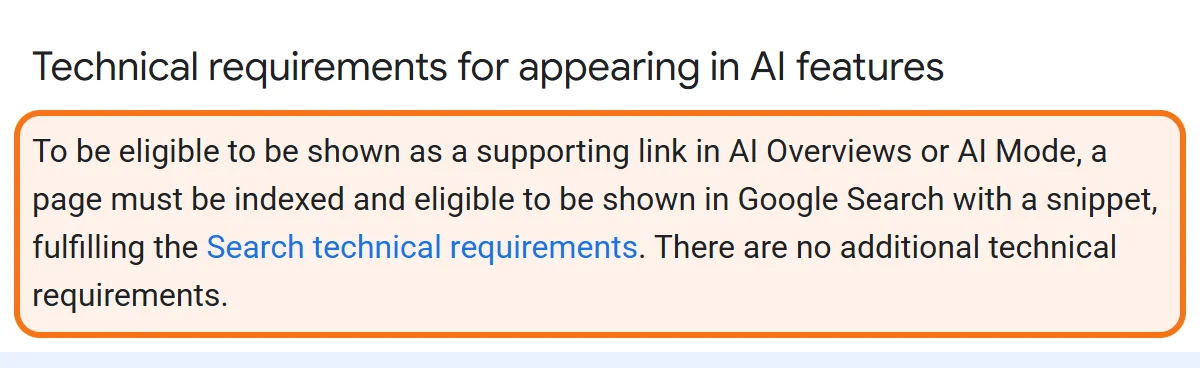
The good news is that there is no secret trick. Google says the same SEO basics apply to its AI features:
What moves AI answers for a practice:
- Consistent facts everywhere. The same practice name, address, phone, doctors and specialties on your website, Google profile, health directories and insurance network listings.
- Pages that answer real questions. “Do you take new patients?”, “Which insurance do you accept?”, “Do you treat children?” answered in plain sentences on your site.
- Doctor pages. One page per doctor with training, board certification and the procedures they perform, linked from the procedure pages.
- Testing. Ask the engines the questions your patients ask, save the answers and repeat each month. If an engine says something wrong, our guide on fixing wrong AI information about your company explains where to correct it.
What Medical Practice SEO Costs in Dallas
Prices vary widely between agencies, so here are ours, as published on our healthcare SEO services page. All ongoing plans are month to month with no long-term contract.
| Plan | Price | Best for |
|---|---|---|
| Search & AI Opportunity Review | Free | Any practice that wants to see who wins its patients’ searches today and what to fix first |
| AI visibility monitoring | From $500/month | Practices that already rank well and want monthly tracking of AI answers |
| Local SEO + AI Growth | From $1,250/month | A single-location practice that needs Google, Maps and AI visibility, procedure pages and tracking |
| Competitive SEO + AI Growth | From $2,500/month | Multi-location groups, several specialties or competitive cosmetic procedures |
What this means for you: most established local businesses we work with invest $1,500 to $2,500 a month. One-time technical or website work is quoted separately only when it is needed; it is not an automatic setup fee.
To judge whether that is worth it, do the math with your own numbers. Example: suppose a new patient is worth $600 to your practice over the first year, and better search visibility brings five extra new patients a month. That is $3,000 a month in first-year value against a $1,250 plan. If your numbers do not work out on paper, do not sign. The figures here are made up to show the calculation, not a promise.
On timing, our healthcare clients typically see early ranking and inquiry improvements within 60 to 90 days, with larger results building over four to six months as pages, reviews and local signals add up.
How to Choose a Medical SEO Agency in Dallas
Ask every agency the same questions and compare the answers. The table shows what a good answer sounds like and what should make you walk away.
| Ask this | Good answer | Red flag |
|---|---|---|
| Which tags will you put on our booking and portal pages? | None that send health details to ad platforms; they explain how bookings are measured | “We add the Meta pixel to every page” |
| Who writes and reviews our medical pages? | Their writer drafts, your clinician reviews and is named on the page | Unreviewed AI text published under “Admin” |
| How will you get us more reviews? | Ask every patient the same way and reply without confirming anyone is a patient | Paid reviews, or asking only happy patients |
| What will you report each month? | Calls and booking requests from search, Search Console data and AI answer tests | Only “rankings” for keywords nobody searches |
| Can you guarantee the first spot? | No, and they explain why | A guaranteed #1 or a long contract |
How to use this table: one red flag on the tracking or review rows is enough to say no. Those are the two areas where a careless agency can cost a practice more than it brings in.
For a broader checklist that applies to any business, see how to choose an SEO company in Dallas.
Common Mistakes Dallas Practices Make
- One profile for everything. Several doctors sharing one profile, or one doctor with a profile per specialty, both break Google’s rules.
- Keywords in the business name. It may work for a few weeks; it can end in a suspended profile.
- Pixels on the booking form. The fastest way to turn a marketing project into a compliance project.
- Replying to a bad review with details. Even a polite “as we explained at your visit” confirms the person is a patient.
- A single services page. Google cannot rank one page for twenty different procedures.
- No named clinician. Health pages without a visible author or reviewer lose trust with patients and with Google.
What to Do Next
Start with an honest picture. Search for your top three procedures the way a patient would, on your phone, from your office and from a neighborhood you want to serve. Ask ChatGPT the same questions. Write down who shows up and why.
If you want us to do that for you, the free Search & AI Opportunity Review covers your Google, Maps and AI visibility, the competitors who win your patients today and the first three things to fix. You talk to Mantas directly. We are based at 1800 N Field St in Dallas, have more than 15 years in digital marketing, work with 150+ active U.S. clients and hold a 5.0 rating on Google.
Frequently Asked Questions
Our healthcare clients typically see early ranking and inquiry improvements within 60 to 90 days. Larger results build over four to six months as procedure pages, reviews and local signals add up.
Our plans start at $1,250 a month for a single-location practice and at $2,500 a month for multi-location or highly competitive practices. AI visibility monitoring starts at $500 a month, and the first review is free.
If several doctors see patients at one location, Google allows a profile for the practice plus one for each public-facing doctor. A solo doctor working under a practice brand should share one profile named with the practice and the doctor.
Keep them off your patient portal, appointment booking and any form about symptoms or treatment. HHS says tracking on those pages may have access to protected health information. Ask your compliance officer to approve the setup.
Thank the reviewer, do not confirm they are a patient or mention any treatment, and invite them to call the office. HHS has settled cases with dental practices that disclosed patient information online, including one in Dallas.
No. Google says a page must be indexed and eligible to show with a snippet, and there are no additional technical requirements. Clear procedure pages and consistent practice details matter more.
Yes, by building pages around the procedures self-pay patients search for, such as cosmetic and elective treatments, and making price or consultation details clear on those pages.
See who wins your patients’ searches today
The free review checks your Google, Maps and AI visibility for the procedures that matter most, names the practices winning those searches and lists the first three fixes.
Request the Free ReviewCall (346) 244-8617Book a free 30-minute call
Dallas, Texas · no obligation · you speak to Mantas, not a sales desk


